
Securing
Critical Infrastructure.
Operational Technology protection without downtime.
The Security Gap
Understanding the fundamental inversion between IT and OT priorities is critical for effective defense.
IT Security
- 1. Confidentiality
- 2. Integrity
- 3. Availability
OT Security
- 1. Availability (Safety)
- 2. Integrity
- 3. Confidentiality
IT Security
- 1. Confidentiality
- 2. Integrity
- 3. Availability
OT Security
- 1. Availability (Safety)
- 2. Integrity
- 3. Confidentiality
Performance
Availability
Risk Management
Patching
Protocols
Lifecycle
Industrial Defense Services
Specialized engagements designed for the unique constraints of operational technology environments.
ICS/SCADA Assessment
A non-intrusive architectural review and passive traffic analysis to identify vulnerabilities without risking downtime.
Methodology
Passive packet capture (PCAP) analysis, configuration review of PLCs/RTUs, and network segmentation testing.
Deliverable
Vulnerability Matrix & Segmentation Report
Toolset
OT Red Teaming
A full-scope simulation of a sophisticated adversary attempting to pivot from IT to OT and impact physical processes.
Methodology
IT-to-OT pivoting, HMI compromise, protocol fuzzing (lab only), and logic controller manipulation.
Deliverable
Attack Path Narrative & Impact Analysis
Toolset
Compliance Consulting
Gap analysis and remediation guidance for major industrial security frameworks and standards.
Methodology
Mapping controls to IEC 62443, NERC CIP, and NIST SP 800-82. Policy development and incident response planning.
Deliverable
Compliance Gap Assessment
Toolset
IT/OT Convergence Risks
Modern industrial environments are no longer air-gapped. We demonstrate how attackers pivot from compromised corporate workstations to critical control systems using specific protocol vulnerabilities.
- Insecure Remote Access (VPNs)
- Dual-Homed Workstations
- Shared Active Directory Credentials
- Unpatched Jump Hosts
Modbus TCP
Lack of authentication allows any device on the network to send read/write commands to coils and registers.
DNP3
Often deployed without Secure Authentication (SA), enabling attackers to inject unsolicited responses or freeze polling.
Ethernet/IP
CIP (Common Industrial Protocol) vulnerabilities can lead to denial of service or remote code execution on PLCs.
Industrial IoT (IIoT) devices often bridge the gap between IT and OT, introducing new wireless attack vectors.
Explore IoT & Firmware SecuritySafety First:
Non-Intrusive Testing
In the world of Industrial Control Systems, availability is paramount. We understand that a "scan" can crash a legacy PLC. That's why our methodology is built from the ground up to be passive, non-intrusive, and safety-critical. We treat your operational uptime with the same reverence as your security.
Passive Reconnaissance
We deploy listening-only taps to capture network traffic (PCAP) without injecting a single packet. This allows us to map asset inventory and communication flows safely.
Architecture Review
We analyze firewall configurations, network diagrams, and switch ACLs to identify segmentation gaps and potential pivot points from IT to OT.
Offline Analysis
We analyze firmware images and project files (e.g., .ACD, .L5K) in our isolated lab to find logic vulnerabilities and hardcoded credentials.
Digital Twin Testing
If active exploitation is required, we replicate your critical PLCs in our lab environment to validate exploits before they ever touch your production network.
Controlled Validation
Only with explicit approval and during scheduled maintenance windows do we perform active validation on non-critical redundant systems.
Safety Instrumented Systems
We specifically verify that safety systems (SIS) are segregated and cannot be disabled via the control network.
Field Reports
Real-world examples of how we've secured critical infrastructure against sophisticated threats.
Water Treatment Plant
The Challenge
A municipal water utility needed to verify if their SCADA network was truly air-gapped from the corporate IT network.
The Breach
We compromised a corporate workstation via phishing, then pivoted through a dual-homed historian server to reach the HMI controlling chemical dosing pumps.
The Fix
We demonstrated the ability to alter chemical levels (in a safe simulation). The client immediately implemented a unidirectional gateway (data diode).
Automotive Manufacturing
The Challenge
An automotive plant wanted to test the resilience of their robotic assembly line against ransomware.
The Breach
We found an unpatched engineering workstation running Windows 7 connected to the shop floor Wi-Fi. We used EternalBlue to spread laterally to the PLC programming subnet.
The Fix
The client segmented the shop floor network into smaller zones (cells) to contain future outbreaks and upgraded their endpoint protection.
Energy Grid Substation
The Challenge
A power utility needed to audit a new substation for NERC CIP compliance before energization.
The Breach
We discovered that the RTUs were using default DNP3 passwords and lacked message authentication. We could inject false telemetry data to the control center.
The Fix
The utility enabled DNP3 Secure Authentication (SA) and implemented strict MAC address filtering on the substation switches.
Secure Your Critical Assets
Industrial environments require specialized security. We bridge the gap between IT security and OT engineering.
Beyond Data Loss:
Physical Damage
In OT environments, a breach doesn't just mean stolen files. It means manipulated valves, disabled safety systems, and potential physical harm to equipment and personnel. We model these "Cyber-Physical" attack paths to show you the worst-case scenario.
Safety Systems (SIS)
Testing bypass attacks on emergency shutdown protocols.
Process Integrity
Verifying logic manipulation that could alter chemical mixes or speeds.
Modeled Failure Scenarios
Chemical Overdosing
Attackers manipulate the logic of dosing pumps to inject unsafe levels of chlorine or fluoride.
Public health crisis, pipe corrosion, and massive regulatory fines.
Turbine Overspeed
Disabling the safety instrumented system (SIS) and forcing the turbine beyond its RPM limits.
Catastrophic mechanical failure, explosion, and long-term generation loss.
Grid Instability
Simultaneous tripping of multiple circuit breakers (Aurora Attack) to cause desynchronization.
Regional blackouts, damage to transformers, and cascading grid failure.
Thermal Runaway
Suppressing high-temperature alarms while disabling cooling systems in a reactor vessel.
Fire, explosion, and release of toxic fumes into the environment.
Regulatory Compliance
Our assessments map directly to the frameworks that govern your industry, ensuring you pass audits with confidence.
NERC CIP
Critical Infrastructure Protection standards for electric power systems.
IEC 62443
Global standard for security in industrial automation and control systems.
NIST SP 800-82
Guide to Industrial Control Systems (ICS) Security.
AWIA / TSA
Water infrastructure and pipeline security directives.
We validate that all interactive remote access sessions are routed through an Intermediate System (Jump Host) and use multi-factor authentication. We also test for 'dual-homed' devices that bridge the ESP.
We attempt to bypass authentication on HMIs and Engineering Workstations. We check for default vendor passwords (e.g., 'admin/1234') on PLCs and RTUs, which is a common violation of SR 1.1.
We review ACLs on industrial firewalls and switch configurations to ensure that only necessary protocols (e.g., Modbus TCP on port 502) are allowed between zones, blocking unauthorized lateral movement.
We simulate a ransomware attack on the OT network to test the effectiveness of the Incident Response Plan. We measure the 'Time to Detect' and 'Time to Isolate' for the SOC/NOC team.
We perform a passive discovery of all assets to identify unauthorized devices (Shadow OT). We then map known vulnerabilities (CVEs) to these assets without active scanning to ensure operational safety.
Control Framework Mapping
How our technical testing validates specific regulatory requirements.
| Framework & Control | Our Test Procedure | Methodology Detail |
|---|---|---|
NERC CIP-005-6 Electronic Security Perimeter (ESP) | Network Segmentation Verification | We validate that all interactive remote access sessions are routed through an Intermediate System (Jump Host) and use multi-factor authentication. We also test for 'dual-homed' devices that bridge the ESP. |
IEC 62443-3-3 SR 1.1 - Human User Identification & Authentication | Password Policy & Auth Audits | We attempt to bypass authentication on HMIs and Engineering Workstations. We check for default vendor passwords (e.g., 'admin/1234') on PLCs and RTUs, which is a common violation of SR 1.1. |
NIST SP 800-82 AC-3 - Access Enforcement | Least Privilege Analysis | We review ACLs on industrial firewalls and switch configurations to ensure that only necessary protocols (e.g., Modbus TCP on port 502) are allowed between zones, blocking unauthorized lateral movement. |
TSA Pipeline SD02C III.B - Incident Response Plan | Red Team Drill | We simulate a ransomware attack on the OT network to test the effectiveness of the Incident Response Plan. We measure the 'Time to Detect' and 'Time to Isolate' for the SOC/NOC team. |
AWIA Section 2013 Risk & Resilience Assessment | Asset Inventory & Vulnerability Scan | We perform a passive discovery of all assets to identify unauthorized devices (Shadow OT). We then map known vulnerabilities (CVEs) to these assets without active scanning to ensure operational safety. |
* We also support regional standards including NIS2 (EU), AESCSF (Australia), and local directives.
Why Trust RadiumFox?
We understand that in OT, availability is king. Our "Safety First" methodology ensures we never disrupt your operations while uncovering critical vulnerabilities.
Non-Intrusive Testing
We use passive traffic analysis and careful enumeration techniques that respect the fragility of legacy PLC/RTU stacks.
OT-Native Engineers
Our team speaks Modbus, DNP3, and BACnet. We know the difference between a corporate server and a safety controller.
Zero False Positives
Every finding is manually verified. We don't hand you a raw scanner report full of noise.
Actionable
Operational Intelligence
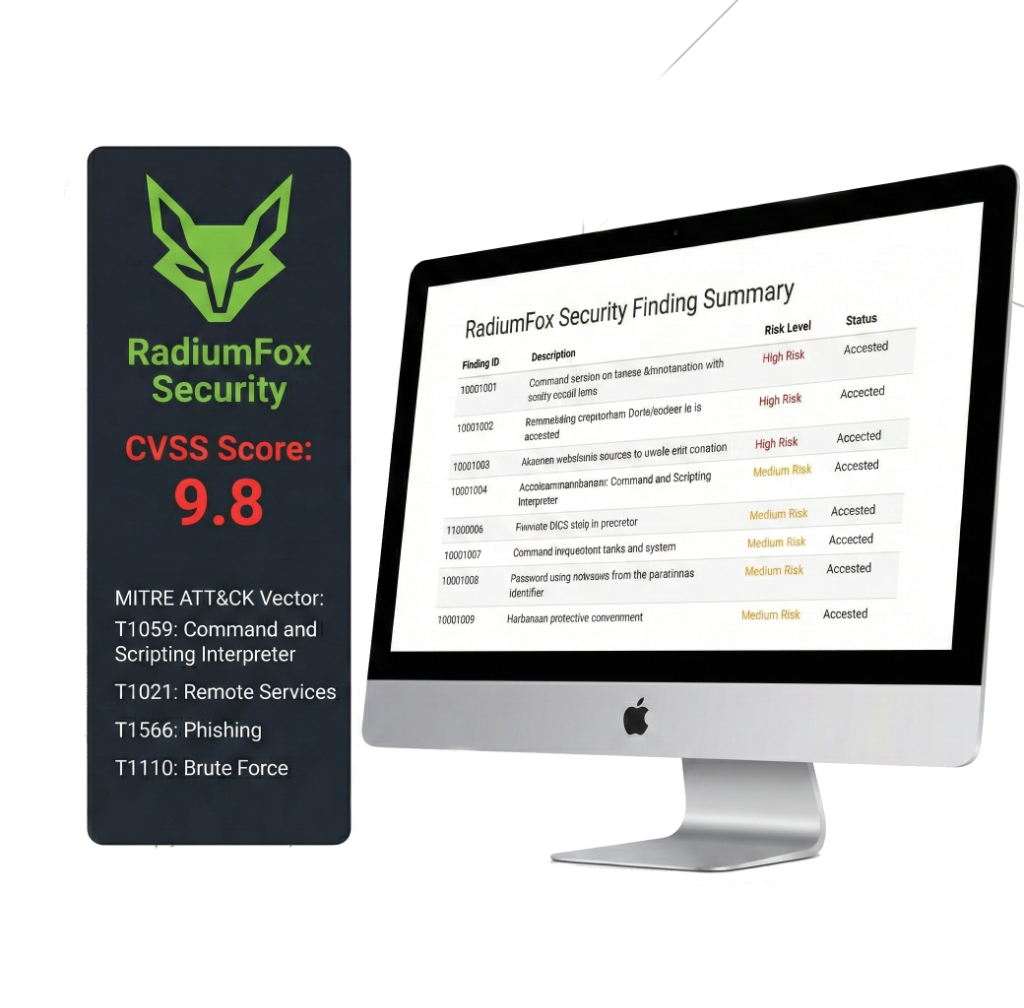
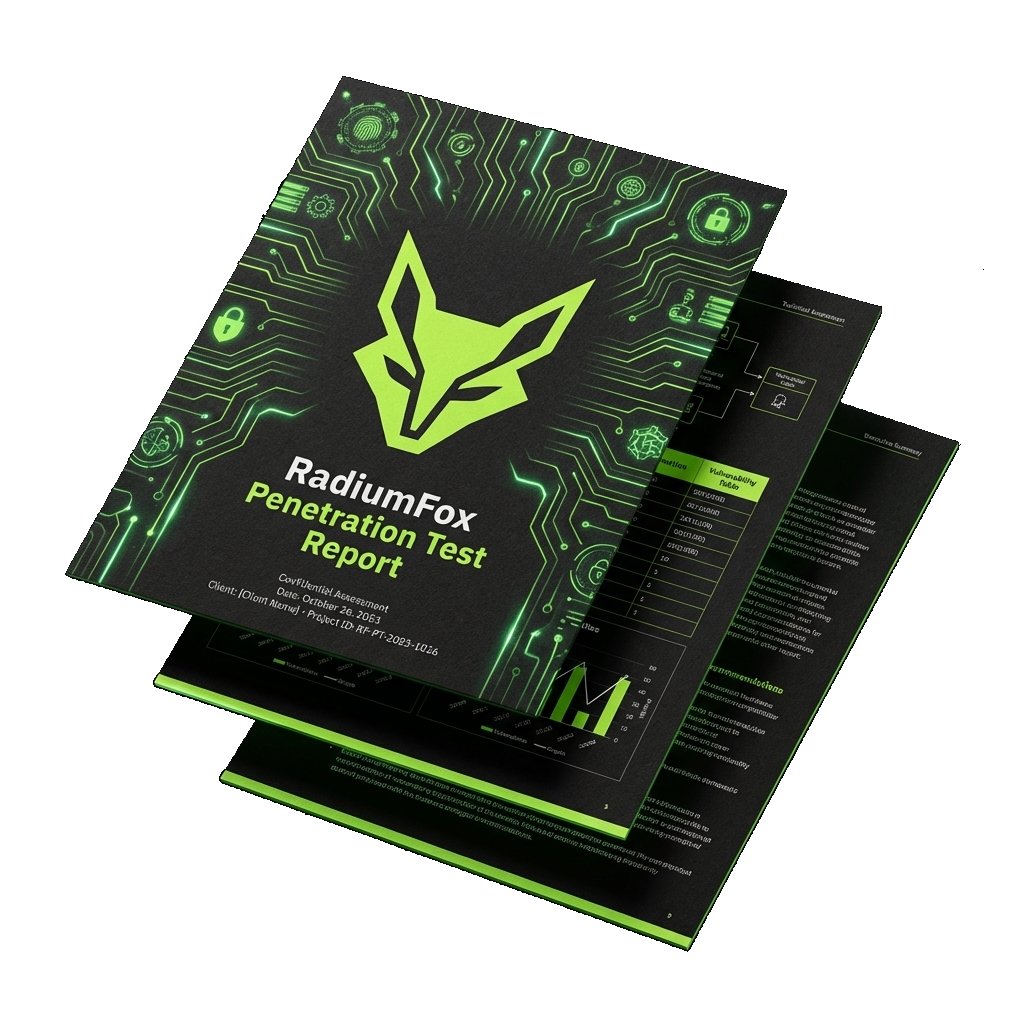
Our reports bridge the gap between IT security and OT engineering. We provide technical depth for security teams and operational context for plant managers.
Network Topology Mapping
Visualizing the Purdue Model layers and identifying unauthorized cross-zone connections.
Vulnerability Impact Analysis
Assessing the kinetic impact of vulnerabilities on physical processes and safety systems.
Remediation Roadmap
Prioritized fixes that respect maintenance windows and legacy system constraints.
Compliance Artifacts
Documentation mapped to IEC 62443, NIST 800-82, and NERC CIP standards.
Industrial Security FAQ
Answers to your questions about safety, scope, and compliance in critical infrastructure.
Join Us. Cut Costs.
Focus on What Matters.
Unlock high-impact penetration testing that drives real security gains. Led by experts, tailored for results, and designed to stay budget-friendly.
Submit Info
Share your environment, scope, or compliance needs via our quick form.
Senior Review
A lead RadiumFox engineer reviews and tailors your assessment—no junior handoffs.
Optional Scoping Call
We'll clarify priorities and technical details if needed.
Clear Quote
Expect a fixed-cost proposal—no hidden fees or fluff.
Fast Kickoff
Once approved, most projects launch within 5–7 business days with full support.